
About KalindaRoseStevenson.com
About Kalinda Rose Stevenson
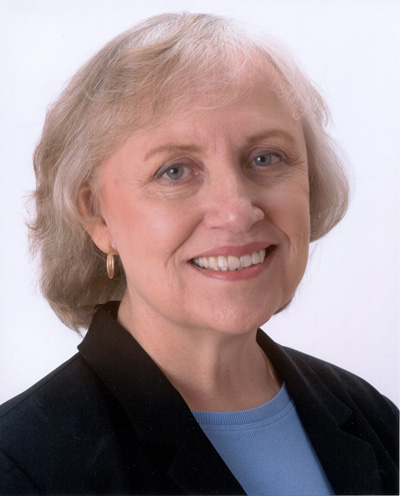
Welcome. Let me introduce myself to you. I am a former teacher of university and theological seminary students. In addition to undergraduate university degrees in psychology and chemistry and a theological seminary master’s degree, I earned my Ph.D. at the Graduate Theological Union in Berkeley, California, in cooperation with the University of California at Berkeley.
Since leaving the academic world, I have created various websites and published books, ebooks, newsletters, videos, webinars, online articles, and blog posts.
About Perspectives
With hindsight, I realize that the common theme of just about everything I have ever written comes down to one single word: perspective.
Perspective is about vision. Perspective is what you see from where you stand. If you change where you stand, you will have a different perspective. If you are struggling with problems in your life, and can’t figure out how to solve them, the first step is to change your perspectives on your problems.
The importance of perspective applies to any circumstance in your life. Whatever life problems you are struggling to solve, whatever goals you are striving to fulfill, whatever dreams you are daring to dream, changing perspective is what brings about change in your life.
Anytime you feel stuck, frustrated, discouraged, confused, or hopeless about some aspect of your life, I urge you to ponder these words by Marcus Aurelius.
Everything we hear is an opinion, not a fact.
Everything we see is a perspective, not the truth.
Here’s the point of all of this. We live in a world filled with problems, failures, tragedies, set-backs, illnesses, diseases, wars, suffering, cruelties, betrayals, and deaths—the list goes on. Many of us never get over the legacies of such experiences.
We also live in a world in which some people have learned to take the stress and anger and hurt and struggle out of their lives by changing their perspectives on whatever happens in their lives.
This is another reality of human life. We have the capacity to change our lives by changing our perspectives on how we choose to respond to anything in our lives. Is it easy? Life-change can be easy and it be hard. It’s up to each of us to choose.
About the Website
The life-changing power of perspective is the focus of this website and all that I have written and all that I intend to write. I am not writing as the expert with all of the answers, but as one who is also learning how to change my own life by changing my perspectives.
This is why I have chosen to consolidate my websites into one website about life-changing perspectives. [The consolidation process will take a while to complete.]
Life is a journey for all of us. Writing books and blog posts and keeping a daily journal for most of my adult life are important parts of my own life journey. Whatever your life-journey, a journey requires changes in perspective. Whatever life problems you are struggling to solve, whatever goals you are striving to fulfill, whatever dreams you are daring to dream, changing perspective is what brings about change.
I welcome you to join me. I also welcome your insights on how your own life journey has changed your perspectives on your life.
About the Categories
Although life-changing perspectives is the common theme, the categories of the website focus on different aspects of life. The categories are Perspectives on:
Power of Love
Self-Confidence
Health & Wellness
Self-Identity
Chronic Anxiety
Happiness Now
Creations & Problems
Bible Assumptions
Stress Relief
Hero’s Journey Stories
Critical Thinking
Writing & Writers
Click on each category picture on the home page to take you to the list of posts in that category.
About the Pictures
If you glance at my website, you will quickly notice that I love photographs of the natural world. Rather than use pictures to describe life problems, I have intentionally chosen to use images on my pages and posts that are beautiful, interesting. and uplifting. The only time I will use pictures of unhappy, stressed-out, miserable people is here on this page. The pictures are here to demonstrate a problem.
Take a look at this gallery of “stressed-out” people. These are posed pictures. A photographer says to the model: “Look stressed out.” The models assume the stereotyped poses of stressed-out people posing for the camera. They grab fistfuls of hair and mime screaming. Or they hold their heads in their hands. You’ve probably seen such pictures again and again online. Stressed-out people are pictured as helpless, tormented, even demented. These are actually photos of ham actors who are attempting to look so stressed-out, unhappy, helpless, and frustrated that they attack their own hair.
About Life Energy
I choose not to use such pictures on the pages and posts of my website for three reasons.
First, such images cannot empower you because they weaken your energy. In his book, Life Energy: Using the Meridians to Unlock the Hidden Power of Your Emotions, Dr. John Diamond claims that just looking at certain pictures can weaken your energy meridians. In contrast, other pictures can empower you and strengthen your energy meridians. Dr. Diamond has a simple method that can demonstrate very quickly that looking at such pictures can weaken your energy.
Even though you know that these are exaggerated, posed pictures of paid models, such pictures weaken your capacity to change your stressed-out life into a peaceful life.
I choose not to fill my website with such energy-draining images, both for the wellbeing of my readers and for my own wellbeing. I don’t want to look at such pictures every time I add a page or post to my website. I would rather post spectacular photos of the natural world and its creatures and interesting photos of people actively engaged in their lives than to post an endless array of posed pictures of people trying to look miserable.
Second, beautiful pictures can strengthen your energy. If you feel stuck in your life somehow, one way to change your perspective is to spend time enjoying the wonders and magnificence of nature. If you can’t actually go off to nature, you can bring nature’s beauty into your life simply by looking at beautiful pictures of the natural world.
Third, I love to find beautiful pictures and I love to look at them. I especially love to go out in nature and take my own pictures. My idea of a good time is to put on my hiking boots and go on a photoshoot with my husband in a beautiful place.

This is a photo of me on one of our hikes on Mount Charleston, a mountain peak about 35 miles northwest of Las Vegas, Nevada. Although the photo isn't great, the hike up the mountain was great fun.
Changing Focus
One of the lessons I have learned as a serious amateur photographer is that any picture I capture with the camera depends on where I focus the camera. Do I get closer or back up? Do I include the background or do I focus just on the subject? What happens when I change the angle? What happens when I change the shutter speed? What’s the difference between photos of the same subject in the same location in early morning, or at noon, or late in the afternoon? You get the point.
Any photo results from the photographer’s focus on a particular perspective. Our lives are filled with wide ranges of possibilities. If you are a photographer, you choose your perspective of your pictures. If you change your perspective in any way, you will create a different picture.
The importance of focus applies to any circumstance in your life. Whatever life problems you are struggling to solve, whatever goals you are striving to fulfill, whatever dreams you are daring to dream, changing your perspective by changing your focus is what brings about life-change.
I hope you also love the pictures on my pages and posts and will let the pictures themselves inspire you and empower you to live your life with awe, joy, and peace.
All the best,
Kalinda Rose Stevenson, Ph.D.